

- This event has passed.
Combustible Dust: What You Need to Know About Upcoming OHS Regulatory Changes
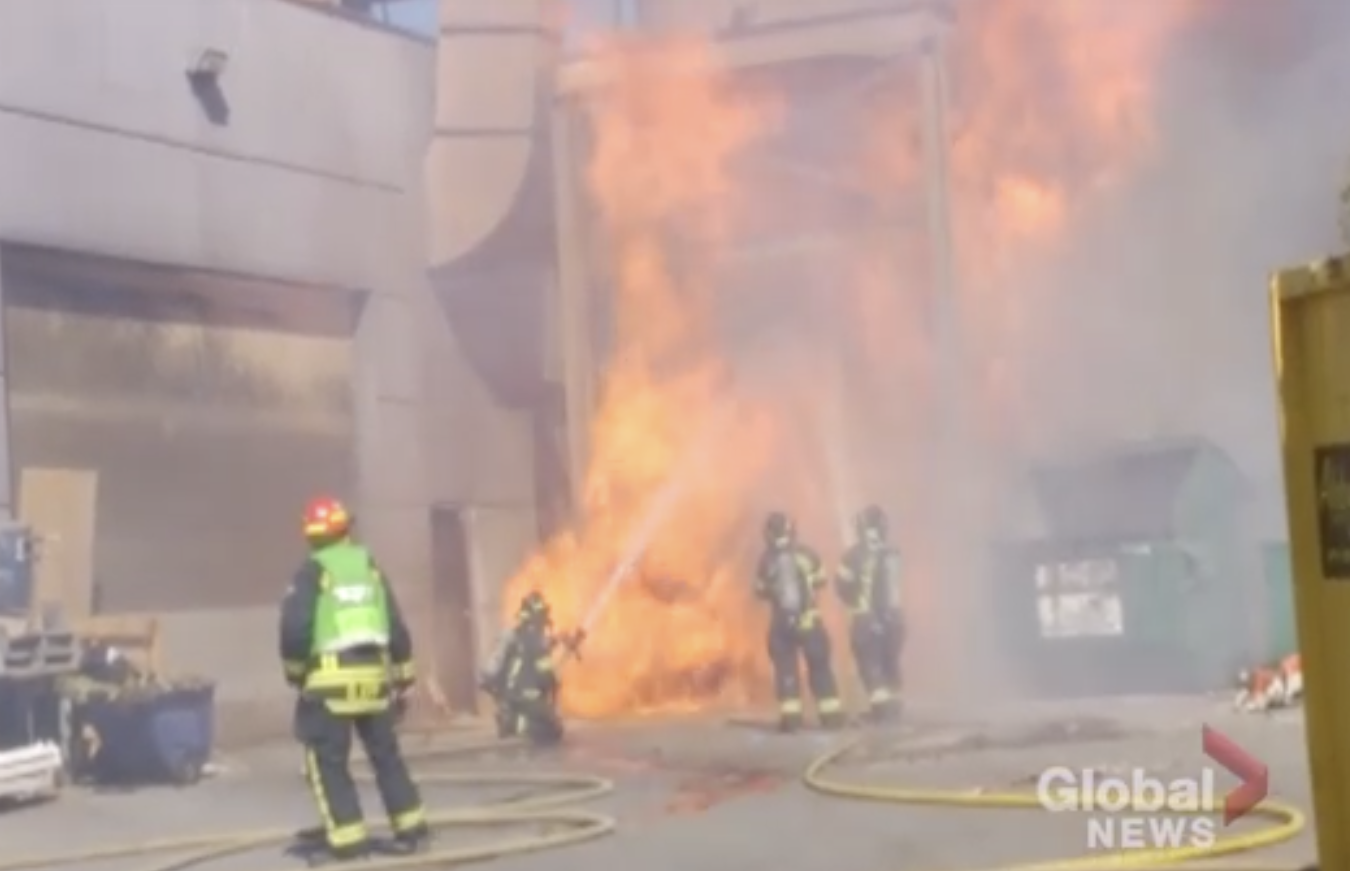
PHOTO: Abbotsford firefighters were battling a blaze behind the Woodworks Furniture Factory when a cloud of sawdust ignited, engulfing three firefighters in a fireball – Sep 12, 2016 | Credit: Global News
– DETAILS –
Amendments to the Occupational Health and Safety Regulation relating to combustible dusts will take effect January 4, 2027. To help you prepare for and implement these new requirements, CWMA is working with WorkSafeBC to ensure our solid waste and resource recovery sector has accurate and consistent information.
Combustible dust is any fine material that can ignite when exposed to an ignition source and explode when dispersed in the air. Common combustible dust hazards can arise from carbon-based materials such as wood, paper, cardboard, grain, plastics, and rubber, as well as certain metal dusts including aluminum, magnesium, and zinc.
These materials move through nearly every part of the waste and resource recovery system.
Any operation that collects, handles, processes, or stores them may face significant fire and explosion risks if combustible dust hazards are not properly identified and controlled — including transfer stations, material recovery and recycling facilities, composting and organics processing sites, wood waste and construction and demolition operations, scrap metal and auto recycling yards, EPR collection depots, collection and hauling operations, and landfills.
Upcoming changes to WorkSafeBC’s combustible dust regulations will place broader responsibilities on employers to identify and assess hazards, implement effective health and safety programs, and train workers to manage combustible dust risks in the workplace.
Join this webinar to learn what these regulatory changes mean for the solid waste and resource recovery sector, and how to prepare for compliance.
MORE INFORMATION: https://www.worksafebc.com/en/health-safety/hazards-exposures/combustible-dust
– PROGRAM –
Participants will learn:
- What combustible dust is and how it can create fire and explosion hazards
- Common combustible dust sources across waste, recycling, and organics operations — including shredding, grinding, screening, sorting, conveying, baling, and material storage
- Key changes to WorkSafeBC combustible dust regulations
- Employer responsibilities for hazard assessment, prevention, and control
- Steps waste sector employers can take now to improve safety and prepare for compliance
– AGENDA –
- CWMA Welcome: Introductions, Acknowledgments
- WorkSafe BC Presentation with Kim Stubbs – Industry and Program Specialist and Mike Tasker – Supervisor, Prevention Field Services
- Facilitated Question & Answer
As with all CWMA events, this session will include a recap, additional information, and links.
– NO COST –
These events are made possible by our members’ annual fees.
If you are not yet a member and would like to help us keep offering events like this, please consider joining CWMA!
– VIRTUAL EVENT –
CWMA uses the Zoom Platform for events. Zoom Link is sent the DAY BEFORE the event.